A BSc earned through distance or online mode can lead to private-sector jobs, government posts, and postgraduate study — but how far it takes you depends far more on your subject, your skills, and whether the degree is approved than on the mode of study. This guide maps the career scope after BSc distance education by subject, shows indicative salary ranges, explains the government and private routes, and sets out what to do in the first five years so the degree turns into a career.
Salary figures below come from education and career portals reporting 2026 fresher ranges. Treat them as indicative bands, not offers: pay moves with city, employer, and skills.
⚡ Quick Answer — Career Scope After BSc Distance Education
- Typical fresher pay: Portals commonly report about ₹2 to ₹6 LPA for BSc freshers, with technology and data roles at the upper end and lab roles at the lower end
- Strongest private routes: IT and data roles (with coding or SQL skills), pharma and diagnostic quality roles, research assistance, teaching, and banking or finance support
- Government routes: Graduate-level central and state recruitment, plus subject-specific posts such as drug inspector or forest services, which set their own degree conditions
- Biggest salary lever: Skills and a postgraduate step (MSc, MBA, MCA) matter more than the delivery mode
- Before enrolling: Confirm the university’s UGC entitlement and your exact program on ugcdeb.gov.in, since approval covers specific programs and sessions
Want to Match a BSc Subject to a Career? Get Free Guidance at CIIS India
CIIS India helps you choose a subject for your target career, verify UGC approval, and handle admission, free, before you pay any fees. 9+ years of experience. 50,000+ students enrolled.1. Career Scope After BSc Distance Education — What Actually Drives Outcomes
| Factor | Why It Matters | What You Can Do |
|---|---|---|
| Subject choice | It decides which roles and government posts you can apply for | Pick the subject from the job you want, not the other way round |
| Degree approval | An unapproved degree can fail verification regardless of marks | Verify entitlement and program listing before paying |
| Skills beyond the syllabus | Employers hire for tools and practical ability | Add Excel, SQL, Python, lab techniques, or domain certificates while studying |
| Work experience during the degree | Distance students can work while studying and graduate with experience | Take a relevant job or internship from year one |
| Next-step qualification | MSc, MBA, or MCA lifts both roles and pay | Plan the postgraduate move before you finish the BSc |
Long-tail note: “Is a BSc distance degree respected by employers?” — Employers typically screen for recognised universities and then test skills. Published salary data rarely separates degree mode, so what you can do and show carries more weight than how you attended classes. One real limitation: campus placement drives are mostly open to regular students, so distance graduates rely more on direct applications, referrals, and experience.
2. BSc Distance Education Career Opportunities — By Subject
| BSc Subject | Typical Roles | Indicative Fresher Range (Portal Reports) |
|---|---|---|
| Computer Science / IT | Junior developer, IT support, web developer, data analyst trainee | About ₹3 to ₹6 LPA; stronger profiles reported higher |
| Mathematics / Statistics | Data analyst trainee, banking or insurance analyst, actuarial trainee, teaching (with B.Ed) | About ₹3 to ₹6 LPA; analytics roles reported higher with skills |
| Chemistry | Quality control analyst, lab technician, pharma associate | About ₹2 to ₹4.5 LPA |
| Biology, Biotechnology, Microbiology | Lab assistant, research assistant, QA analyst, clinical research support | About ₹2.5 to ₹5 LPA |
| Physics | Lab technician, research assistant, technical analyst, teaching (with B.Ed) | About ₹2 to ₹6 LPA depending on role |
| Environmental Science | Environmental analyst, sustainability executive, field researcher | About ₹3 to ₹6 LPA |
Before choosing a subject, note which programs are even available at a distance. Computing and mathematics programs are the most common in online mode, while laboratory subjects depend on specific university approvals with contact practicals, and clinical or regulated health programs such as nursing are generally not available at a distance. Confirm the exact program on the UGC-DEB register.
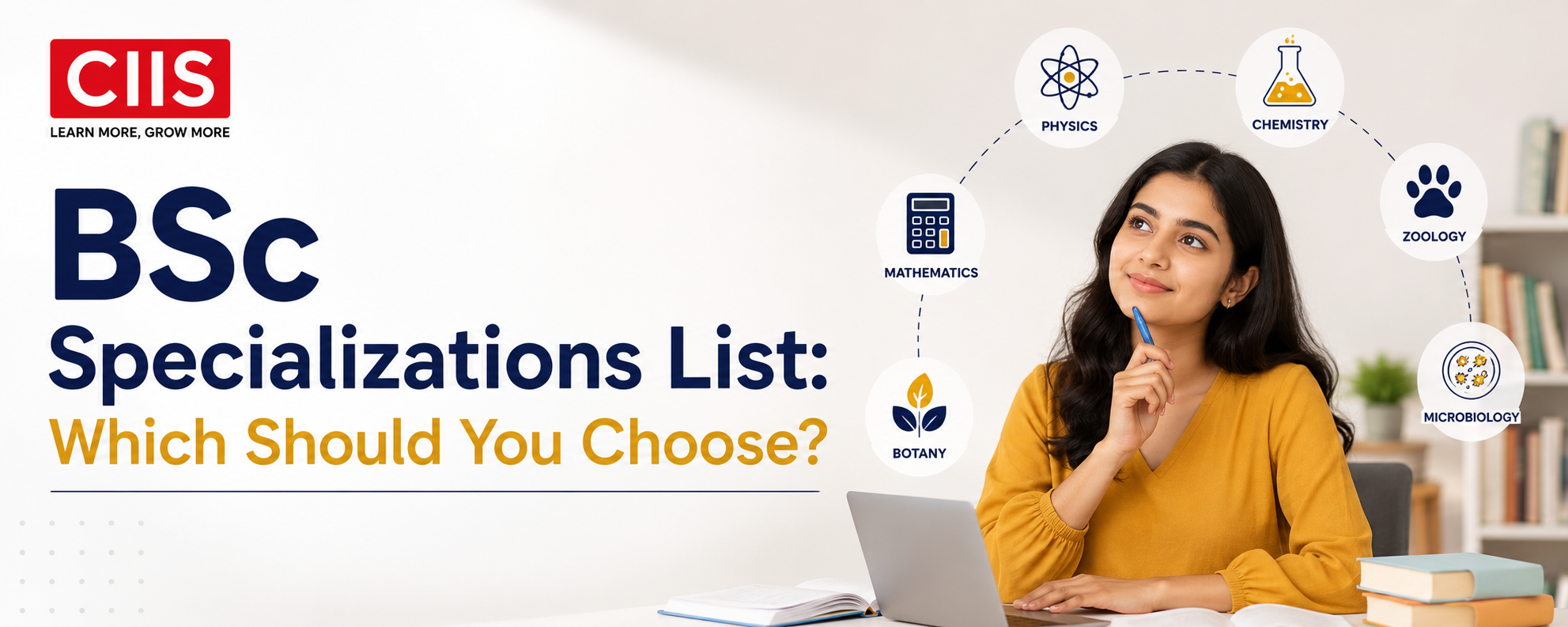
For the full subject comparison, read: BSc Specializations List: Which Should You Choose?
3. Private Jobs After BSc — Where Distance Graduates Get Hired
Most BSc distance education jobs in the private sector are skill-led, so what you can demonstrate counts more than the degree format.
| Sector | Roles | What Helps |
|---|---|---|
| IT and analytics | Software or web developer, data analyst, support engineer | Python, SQL, projects on a public portfolio |
| Pharma and diagnostics | QC analyst, lab technician, documentation executive | Lab practicals, GLP or documentation awareness |
| Research and biotech | Research assistant, clinical research associate | Domain certificates, internships |
| Education and training | Tutor, subject trainer, content developer | Subject depth; B.Ed for school teaching |
| Banking, finance, insurance | Operations or analyst roles | Excel, basic statistics, relevant certifications |
4. Government Jobs After BSc — Posts and How to Check Eligibility
| Type of Post | Typical Degree Condition | Your Next Step |
|---|---|---|
| Graduate-level central recruitment (for example SSC CGL) | A bachelor’s degree from a recognised university | Read the notification’s eligibility and age limits |
| Railway and bank recruitment | Graduation, with some posts limited by subject | Check the exact post requirements |
| State public service commission posts | Graduation as per the state’s service rules | Check state-specific conditions |
| Subject-specific posts (forest, drug inspection, statistics) | A BSc in named subjects, sometimes with additional requirements | Match your subject to the notification |
| Research bodies and fellowships | Usually a postgraduate degree and a qualifying test | Plan the MSc route |
Central posts are paid by pay level under the Pay Commission scales, and each notification states the level, so read the post’s own pay information. UGC’s regulations treat approved ODL and online degrees as equivalent to conventional ones, but each notification sets its own wording. For the full validity analysis, read: Is BSc Distance Education Valid for Government Jobs?
5. BSc Career Options in 2026 — Study, Skill, or Switch
| Option | Best For | Effect on Career |
|---|---|---|
| MSc in your subject | Research, teaching, and specialist roles | Opens postgraduate-level jobs and national eligibility tests |
| MBA | Management and business roles | Shifts you toward managerial pay tracks |
| MCA or a computing postgraduate program | BSc CS, IT, or Mathematics graduates moving into software | Raises the ceiling in IT roles |
| B.Ed | School teaching | Needed for most school teaching posts, with route rules set by NCTE |
| Certificates in data, cloud, or lab quality | Quick skill upgrades while working | Improves hiring odds without a new degree |
For a computing comparison, read: BSc vs BCA: Which Course Has Better Career Scope in 2026?
6. Salary After BSc Distance Education — What to Expect and What Moves It
| Stage | Indicative Pattern | What Moves It Up |
|---|---|---|
| Fresher (0 to 2 years) | Portals commonly report ₹2 to ₹6 LPA overall, with lab roles at about ₹2 to ₹4 LPA and IT or data roles higher | Tools, projects, internships |
| Mid-level (3 to 5 years) | Pay depends on role; IT and analytics roles are reported to rise fastest | Specialisation, a switch to a growing role |
| With a postgraduate degree | Postgraduate-level roles open and pay bands widen | MSc, MBA, or MCA aligned to the role |
| Government posts | Set by pay level in the notification, with allowances | Selection through competitive exams |
Be careful with portal figures. Ranges differ widely between sources, and top-of-range numbers often reflect strong skills or premium employers. Use them to compare roles, not to promise yourself a salary.
For role-wise pay, read: Jobs After BSc Distance Education: Salary & Scope in India
7. BSc Career Scope in India — A Five-Year Plan for Working Students
| Year | Focus |
|---|---|
| Year 1 | Enrol in a verified program; start a relevant job or internship; learn one core tool |
| Year 2 | Build projects or lab experience; collect references |
| Year 3 | Apply for target roles or government exams; shortlist a postgraduate program |
| Years 4 and 5 | Move into the role you chose; start the postgraduate step if it suits your goal |
8. Is It Worth It? Fees, Eligibility, and Approval
A distance BSc is worth it when the subject matches your target role, the program is verified, and the total cost fits your plan. For fees, read: BSc Distance Education Fees 2026 — University-wise Comparison
For eligibility, read: BSc Distance Education Eligibility: Who Can Apply?
For admission steps and documents, read: BSc Admission 2026: How to Apply, Eligibility & Documents
For approval checks, read: Is BSc Distance Education UGC Approved? Validity Explained
9. Study While You Work
Working while you study is the strongest advantage of the distance route, because you graduate with experience. For a practical routine, read: Can I Do BSc Online While Working? Complete Guide
10. BSc Distance Education — Overview and Mumbai Options
For the wider overview, read: BSc Distance Education: Everything You Need to Know in 2026
Mumbai’s employers include pharma, diagnostics, IT services, banking, and finance firms. For local options, read: BSc Distance Education in Mumbai: Top Colleges & Fees
11. CIIS India Mumbai — Career-Led Guidance
CIIS India at Sej Plaza, Marve Road, Malad (West), Mumbai helps students pick a BSc subject based on the job they want.
- Free career-to-subject matching based on your goals and background
- UGC-DEB verification of the university and exact program before you pay
- Eligibility check against each university’s prospectus
- Admission support including documents and enrolment
- Zero-interest EMI options through Eduvanz, Jodo, and Early Salary where the fee allows
- Walk-in at Sej Plaza, Marve Road, Malad (West), Mumbai
Frequently Asked Questions (FAQs)
Career portals commonly report fresher salaries of about ₹2 to ₹6 LPA, depending on subject, role, city, and skills. Lab roles sit at the lower end, while technology and data roles sit higher. Treat these as indicative bands.
I found no reliable data that separates salaries by degree mode. Employers mostly screen for a recognised, approved degree and then assess skills. Campus placements are more accessible to regular students, so distance graduates rely more on direct applications and experience.
Computer Science, IT, Mathematics, and Statistics offer the widest private-sector options, especially with coding or analytics skills. Chemistry, Biology, and Biotechnology lead to lab, quality, and research roles. Choose by the role you want.
Graduate-level recruitment generally asks for a degree from a recognised university, and UGC’s regulations treat approved ODL and online degrees as equivalent. Each notification has its own wording, so read the eligibility clause for the exact post.
Not always. Skills and experience can lift pay on their own, but an MSc, MBA, or MCA widens the roles open to you and is required for research, teaching in colleges, and many specialist posts.
Availability depends on each university’s specific UGC approval, and lab subjects usually need contact practicals. Check the exact program and mode on the UGC-DEB register before you enrol.
It varies with your subject, skills, and city. Students who work or intern during the degree usually move faster, because they graduate with experience and references.
It is worth it when the subject matches your target role, the program is verified as approved, and you add skills alongside the degree. It is a weaker choice if your goal depends on campus recruitment or a lab-intensive path that your chosen program cannot support.